
With a singularly penetrating and clear-sighted mind, he did not cease until he had carried out, often by carrying them out at the same time, the multiple and sometimes audacious projects conceived by his genius
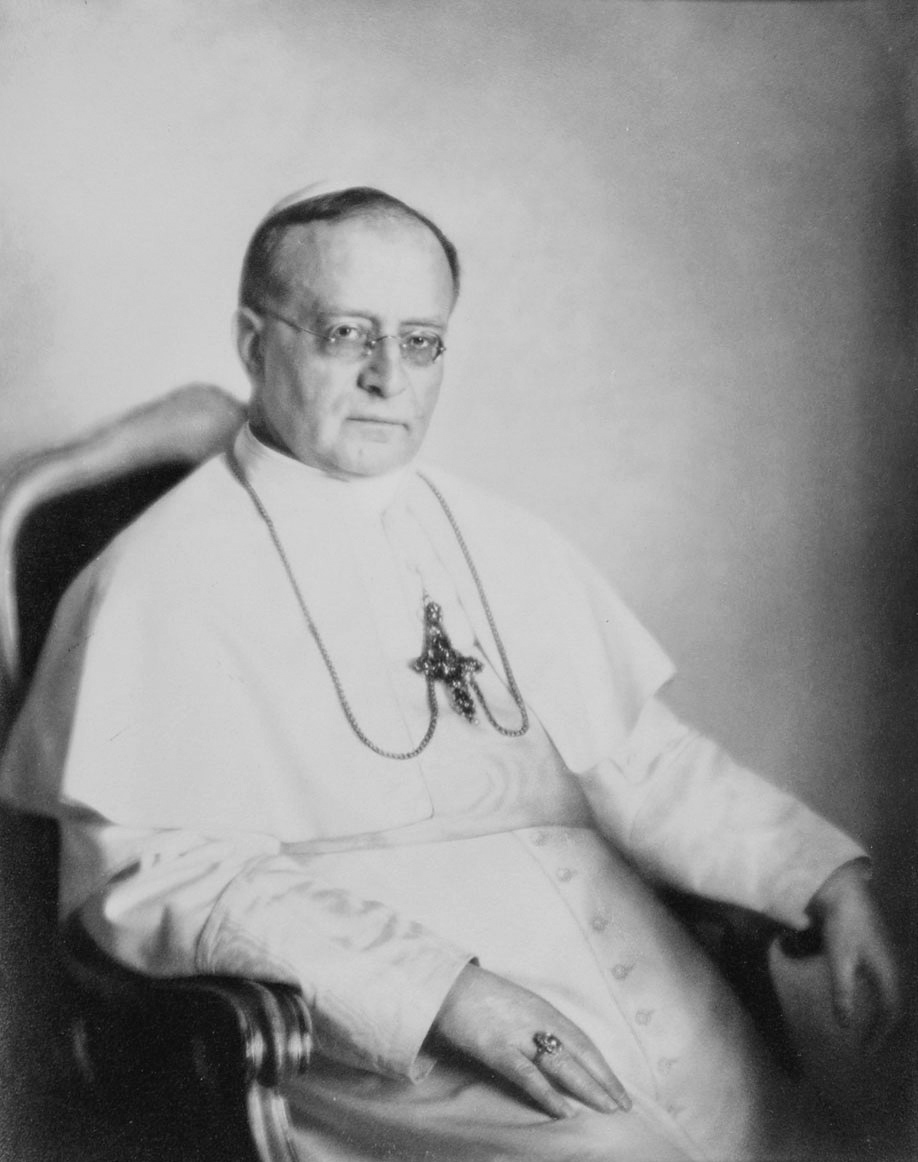
pope pius xi
Our Dear Son, [Cardinal Alexis Charost, Archbishop of Rennes]
Greetings and Apostolic Blessing.
On October 31, a hundred years will have elapsed since the illustrious Charles Lavigerie was born in Bayonne, of a distinguished family, who in the see of Algiers and afterwards, in that of Carthage, happily re-established by Leo XIII, associated with the splendour of the Roman purple the glory of the highest deeds, and with multiple titles illustrated the Church of God.
It is very difficult, in the presence of such an exceptionally gifted personality, and the overflowing activity of a truly admirable life, to trace in a few lines the main features of the man that Lavigerie was. With a singularly penetrating and clear-sighted mind, he did not cease until he had carried out, often by carrying them out at the same time, the multiple and sometimes audacious projects conceived by his genius, when, after mature reflection, he had recognized them necessary or useful for the good of religion.
Accustomed to overthrow or circumvent the obstacles and barriers which opposed the accomplishment of his designs, he made very judicious use of men, things, and circumstances. Tireless at work, he did not allow himself a single day off. Not allowing himself to be discouraged by the trials of his health, nor by illness, nor by fatigue, he travelled through almost all the countries of Europe to plead the cause of Christian humanity and of the blacks, and everywhere solicited alms for their benefit.
From the moment he took charge of the Work of the Oriental Schools, fortunately created in Paris, and of which he was the promoter for six years, he understood that he was called to work for the reunion of the Churches of the East with the Roman Church, and to participate in the salvation of the Arabs and the infidels of Africa. To fulfill his duty he went to Syria in order to distribute charitably to the Christians dying of hunger, the two million that this work had collected, after the odious carnage that the Kurds had just caused.
Scarcely had he been promoted to the archiepiscopal see of Algiers, having only passed through that of Nancy, when it appeared to Charles Lavigerie that, much more than favorable circumstances, it was a divine mission that led him to make the faith of Christ penetrate from the North to the Center of Africa. Consequently, he immediately resolved to respond so well to the extent of this office, that not only by means of schools multiplied in this region and by all the industries of charitable works, he would endeavour to win the hearts and minds of the natives to the true religion, and thus revive the ancient glory of Christian Africa but also that, from the city of his title, as from a centre, he would radiate to the savage and cruel Africans of the interior, the help of the Catholic apostolate and benefits of all kinds. Thus, shortly after taking the direction of his archdiocese, as the plague and an invasion of locusts had accumulated the dead and put food out of price, with as much boldness as magnanimity, he took in little orphaned Arabs to the number of about two thousand and saved their lives.
He founded two institutes of missionaries, one of men, the other of women, whom he sent, as soon as possible, to the regions of Tanganyika and Uganda, from where so many blacks, new seeds of Christians, martyrs of chastity and faith, flew to the eternal abodes. Then, under the auspices of our Predecessor Leo XIII, he undertook to radically destroy African slavery, and by his prayers, speeches, and writings, he aroused the emotion of the heads of government as well, although of the Christian peoples as well as an enthusiasm that has not slowed down since then and continues to produce considerable fruits. A few years later, carried away and impelled by the long-standing design of reconciling the Eastern Church with the Holy See, he ordered his missionaries to establish a residence in Jerusalem, near the church of St. Anne, and to open and direct there a seminary for the instruction and training of the Greek-Melkite clergy.
Now, Our dear Son, without entering into what was the object of the daily work and solicitudes of this illustrious man, to summarily and briefly address the acts of his pastoral office in the Archdiocese of Algiers. Let us first mention the splendid temple he built in honor of the Mother of God, called Our Lady of Africa; then the happy and fruitful administration of the Church of Constantine entrusted to him by the Apostolic Authority. Four years after the holding of a Diocesan Synod, he presided over a Provincial Council which seemed to be, twelve centuries later, the continuation of the African Councils of the past. In Carthage, where there was a chapel dedicated to Saint Louis, he built a college for the use of young Tunisians and a museum intended to preserve the remains of the ancient monuments of that country. But what will above all make Cardinal Lavigerie famous will be to have raised the siege of Carthage, the most famous in all Africa. And in this archdiocese, as soon as the government had been entrusted to him, he put all his zeal into building the cathedral of Saint-Louis and had a monument erected there where his body was to rest, for his declining strength and his weakened health made him foresee an approaching death.
The portrait we have sketched would lack a characteristic feature if we were to pass over in silence the love and filial piety with which Lavigerie assiduously surrounded the Mother Church and the Apostolic See. He gave a striking proof of this at the Ecumenical Council of the Vatican, where, putting human considerations and friendships in the background, he professed and defended the soundest doctrines. Later, in the presence not so much of the orders and councils as of the secret wishes of Leo XIII, he gave them a support which earned him the disapproval of a large number of his fellow-citizens and the incur rash and ill-considered reproaches which filled the last years of his life with bitterness.
It is therefore an excellent inspiration for Our Venerable Brother Alexis, Archbishop of Carthage, to wish to commemorate the hundredth anniversary of his illustrious predecessor and to ask Us to increase, by involving Our Authority, the solemnity of this event. And we, considering the importance of the fact and appreciating the great services which We have recalled and which this illustrious man has rendered to the Church and to human society, We certainly do so very willingly, and it is all the more pleasing to Us because We Ourselves have been for a certain time, in Milan, in the intimacy of Lavigerie.
Therefore, with the intention of honouring more worthily, as if We Ourselves were present at these feasts, the good and faithful servant who applied himself with all his power to extend the reign of Christ in Africa, We choose you, Our dear Son, for Our Legate. You will preside, as Our representative, at this solemn commemoration: It is to be hoped that all those who inhabit these regions, to whatever race they belong, and even those who are not Christians, will understand that We wished to please them, by exalting and honouring the Father who was the author of so many benefits to them and whom We also desire, by making Ourselves morally present, from the moment you have touched the shores of Africa, to consecrate the glory of restored Christian Africa and to call with all Our wishes for a richer harvest day by day for the clergy of the country and the sons of Cardinal Lavigerie. May Our Apostolic Blessing help you to carry out your mission fruitfully. We grant it to you with the greatest affection, as a pledge of divine favours and paternal benevolence, to you, Our dear Son, to Our venerable Brother, the Archbishop of Carthage, and to all his flock.
Given at Rome, at St. Peter’s, on the 25th of August, on the feast of St. Louis the King, in the year 1925, the fourth of Our Pontificate.
PP. Pius XI
(Letter of His Holiness Pius XI to His Eminence Archbishop Alexis Charost, Cardinal-Priest of the Holy Roman Church of Santa Maria de la Victoire, with the title Archbishop of Rennes, instituting him Papal Legate in Carthage for the celebrations of the hundredth birthday of Cardinal Lavigerie, August 25, 1925)